Johnson's View, Boy Scout View and Rainbow View: what you'll see at each
Kaieteur Falls is seen from three main lookouts on a short guided walk. Here's what each one shows you, and how to make the most of your time at the edge.
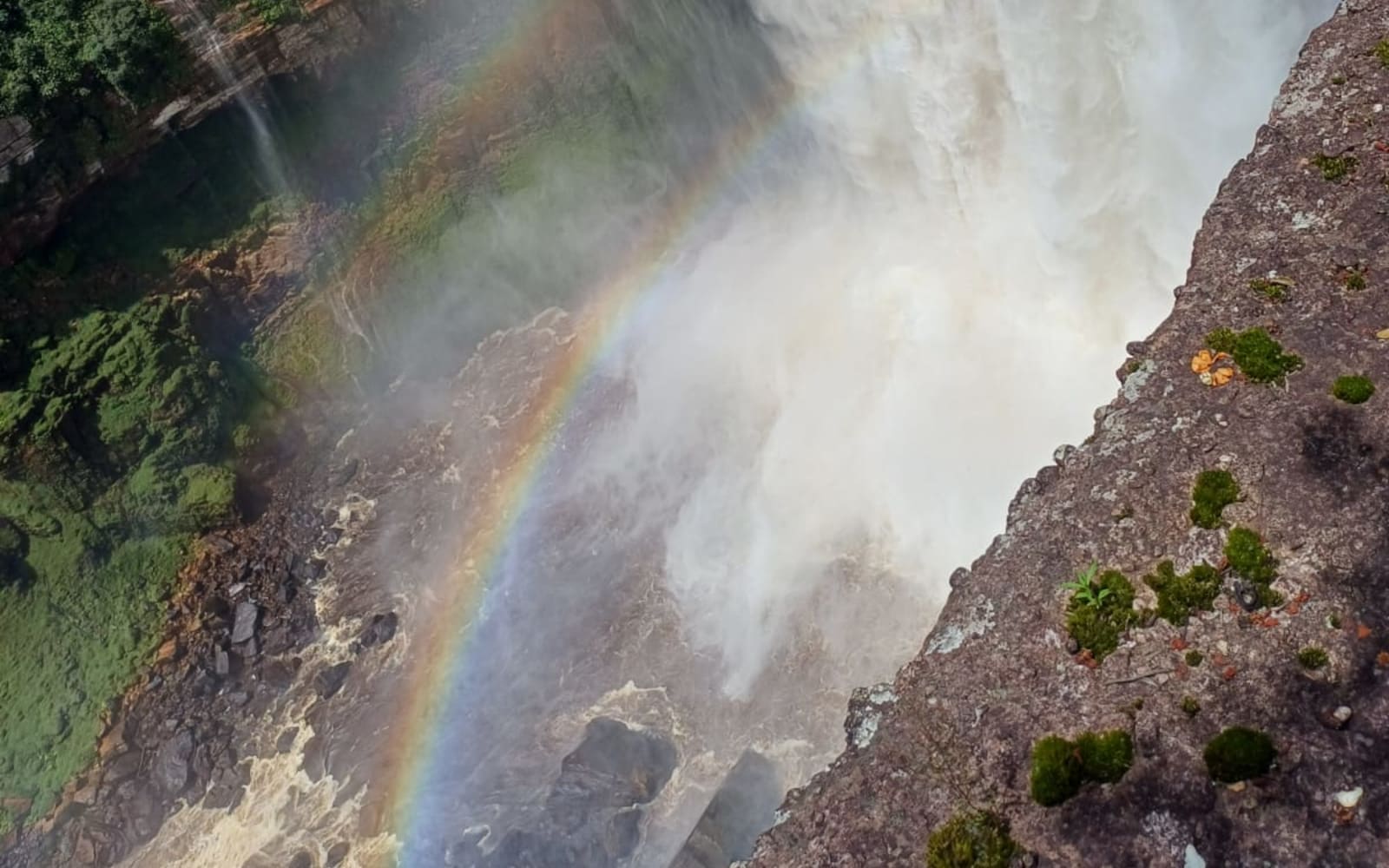
You hear Kaieteur before you see it. A low roar drifts through the forest as you set off from the airstrip, and then the trees open and the Potaro River drops about 226 metres (around 741 feet) straight into the gorge. On a day visit, you'll take in that drop from three main lookouts on a guided walk through Kaieteur National Park, usually about an hour to an hour and a half in total.
Each lookout shows you the falls from a different angle, so it's worth knowing what to look for at each one.
Johnson's View: the big picture
Johnson's View is the wide-angle shot. From here you see the whole waterfall in one frame, the river winding across the plateau above it and the deep gorge it falls into. If you want one photo that shows the scale of Kaieteur, this is usually where you take it.
Look past the falls too: the view back over the forest and the valley is a reminder of how remote this place is. Some visitors find the path to this lookout a little rockier than the others, so wear shoes with grip.
Boy Scout View: face to face
Boy Scout View gives you a front-on look at the water as it pours over the edge. It's the view where the sheer volume of the river really lands. The lookout takes its name from Boy Scout groups who hiked and camped in this area in the early twentieth century.
This is a good spot to slow down. Watch how the colour of the water changes as it falls, from tea-brown at the lip to white spray below, and how the mist rolls up out of the gorge.
Rainbow View: chasing the colour
Rainbow View earns its name on bright days, when sunlight catches the spray and a rainbow hangs over the gorge. Whether you see one depends on the sun and the amount of mist, so it isn't guaranteed. Visitors often say they spotted rainbows from the other lookouts as well, so keep your eyes open the whole way round.
The walk between lookouts is part of the experience. Your guide will point out plants such as giant tank bromeliads, where the tiny golden frog lives, and you may hear or glimpse the bright orange Guianan cock-of-the-rock.
Tips for your time at the edge
- There are no guardrails. The rock edges are open, which makes for great photos, but stay well back and follow your guide's directions, especially on wet rock.
- Wear proper shoes. The trail is short and mostly easy, but it can be uneven and slippery after rain.
- Keep your phone or camera on a strap. A dropped phone at Kaieteur doesn't come back.
- Watch the time. Your guide plans the route around your flight, so enjoy each lookout, then move on when they call it.
- The order can vary. Guides may visit the lookouts in a different order depending on the day and the group.
Plan your visit
Kaieteur is one of those places that photos never quite capture, which is the best reason to go and see it yourself. Seat availability changes daily, so [check seats on the home page](/) or [request your date](/request) and we'll help you find a flight. For more on the park, see our [Kaieteur Falls guide](/kaieteur-falls), and catch a new fact and video every day on [Today at Kaieteur](/today).
Shared something we should credit differently, or want your video removed? Message us and we'll fix it the same day.
More Kaieteur stories

Kaieteur Falls facts: 25 things most visitors don't know
The best Kaieteur Falls facts in one place. A 226 m single plunge, a frog that lives in one plant, a park older than almost any in the Amazon, and 22 more things most visitors never hear.
Best time to visit Kaieteur Falls: a month-by-month guide to rain, water and rainbows
The best time to visit Kaieteur Falls is the drier stretch from about February to April, or September to early November, when flights run more smoothly. Come just after the big rains for the most water. Here's how each month compares.

How tall is Kaieteur Falls? 226 m explained, vs Niagara and Angel Falls
How tall is Kaieteur Falls? Its main plunge is about 226 m (741 ft), and about 251 m (822 ft) with the cascades below. Here's what those numbers mean next to Niagara and Angel Falls.