Best time to visit Kaieteur Falls: a month-by-month guide to rain, water and rainbows
The best time to visit Kaieteur Falls is the drier stretch from about February to April, or September to early November, when flights run more smoothly. Come just after the big rains for the most water. Here's how each month compares.
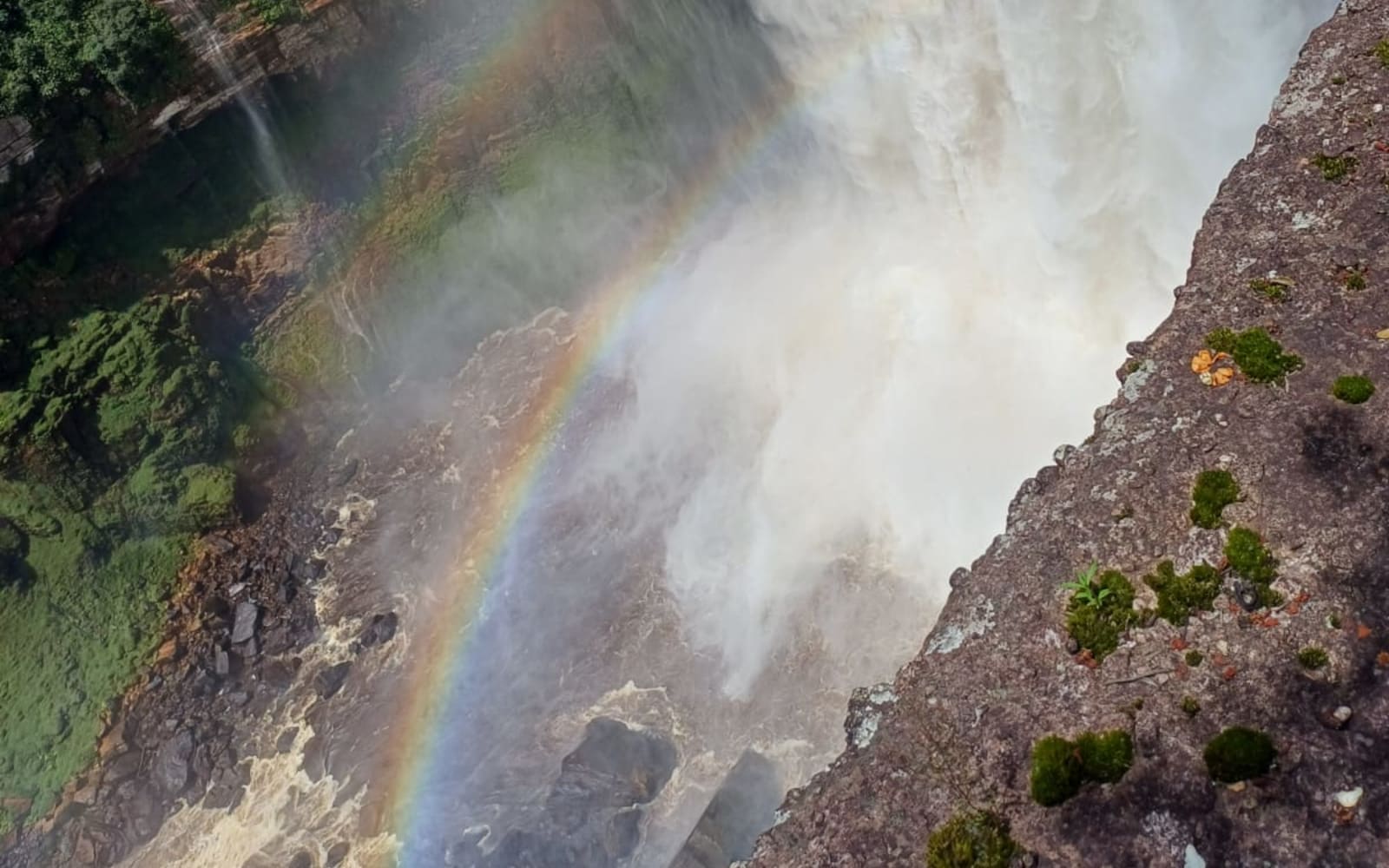
The best time to visit Kaieteur Falls is during Guyana's drier months, roughly February to April and again from September to early November, when skies are clearer and flights to the falls are less likely to be held up by weather. If you want the falls at their fullest, aim for late August into September, just after the long rainy season, when the Potaro River is still running high but the worst of the rain has passed.
There is honestly no bad month to see [Kaieteur Falls](/kaieteur-falls). The falls drop about 226 metres in one clean plunge all year round. What changes is how much water is going over the edge, how often the clouds sit low over the plateau, and how easy it is to get a flight in. Here is how the year breaks down.
Guyana's seasons in one minute
Guyana sits just north of the equator, so it is warm all year and the seasons are about rain, not temperature. Most travel guides agree on the broad pattern:
- Long rainy season: about May to mid-August. This is the wettest part of the year almost everywhere in the country.
- Main dry spells: about February to April, and again from late August or September into early November.
- Short rainy season: around December and January. On the coast this is a clear second wet season. In the interior it is often lighter and shorter, sometimes just a few weeks of showers.
Sources differ by a few weeks on exactly when each season starts and ends, and the weather on the plateau can change within an hour, so treat these as a guide rather than a promise. Rain in Guyana also tends to come as heavy showers and storms, often later in the day, rather than all-day drizzle.
Best time to visit Kaieteur Falls, month by month
January. The short rains are usually easing. A good month to combine Kaieteur with a holiday trip home, though you may still get showers.
February and March. The driest, most reliable months for clear views and smooth flights. It can feel hot in the sun on the open rock near the lookouts, so bring water and a hat. The falls carry less water than after the rains, but they are still huge.
April. Usually still dry early in the month, with the rains starting to build towards the end. A good shoulder month.
May to July. The heart of the rainy season. The river swells and the falls are powerful and loud, but clouds can hide the gorge and flights are more often delayed while pilots wait for a gap in the weather. Go if you are flexible and love big water.
August. The rains ease through the month. Late August is a favourite with many travellers: the falls are still full from months of rain, and the skies start to open up.
September and October. One of the best all-round windows. The river is still high early in this stretch, the weather is calmer, and flights are steadier. October is often one of the driest months on the coast.
November. Usually still dry early on, before the short rains arrive later in the month or in December. Good value for travellers who want to beat the holiday rush.
December. Showers return, especially around Christmas, but it is a popular month for Guyanese living overseas who are home for the holidays. Book early and keep a spare day.
Water level: when are the falls at their biggest?
The Potaro River is fed by rain falling across the Pakaraima highlands, so the falls follow the seasons. The average flow is often quoted at about 663 cubic metres of water a second, but that number rises after the long rains and drops in the driest months. The width of the falls changes too: in the wet season the curtain of water spreads wider across the cliff, while in the dry season it narrows.
For the most dramatic view, go towards the end of the rainy season, from late August into September. In February and March you trade some of that raw power for better odds of a clear, sunny day.
Want to see the difference for yourself? Watch Davidsbeenhere's [Kaieteur Falls in Guyana](/tv/watch/n-z5zPp3-qE) on Kaieteur TV: he waits days on the weather before finally getting his flight. For a calm, cinematic look at the falls, try [Kaieteur Falls close-up, with amazing views](/tv/watch/PIf_4tUzmCA).
When can you see rainbows at Kaieteur?
Rainbows at Kaieteur form when sunlight hits the spray rising from the gorge, with the sun behind you. That means you need two things at once: sunshine and plenty of mist. Bright dry-season days with good water, such as late August to October, give you the best chance. The [lookouts along the trail](/stories/kaieteur-viewpoints-johnsons-boy-scout-rainbow) each catch the spray from a different angle, so keep looking back as you walk.
Does the weather affect Kaieteur flights?
Yes. Most visitors fly in on a day trip from Georgetown, and pilots need clear enough skies to land on the airstrip near the falls. When cloud or heavy rain sits over the plateau, a flight may wait, change its time or move to another day. This happens most often in the rainy season. Seat availability changes daily, so it pays to plan a buffer day in your trip, especially from May to August. Our guide on [how to get to Kaieteur Falls](/stories/how-to-get-to-kaieteur-falls) explains how the day trip works, and When To Travel's [How to visit Kaieteur Falls](/tv/watch/3dXhadpOEc0) on Kaieteur TV walks through the fly-in day versus the overland trek.
FAQ: best time to visit Kaieteur Falls
What is the best month to visit Kaieteur Falls? For clear skies and steady flights, February and March are the safest bets. For more water with fair weather, late August to October is hard to beat.
Is it worth visiting Kaieteur in the rainy season? Yes, if you are flexible. The falls are at their most powerful, but clouds can hide the view at times and flights are more often delayed. Leave a spare day in your plans.
When is Kaieteur Falls most full? After the long rainy season, from late August into September, when the Potaro River is still high.
What time of day is best at Kaieteur? Most day trips spend a few hours at the falls around the middle of the day. Weather on the plateau changes quickly, so the best view is often whenever the cloud lifts. Be ready with your camera.
Is Kaieteur Falls open all year? Yes. Kaieteur National Park welcomes visitors throughout the year, and the falls never run dry. Only the volume of water and the weather change with the seasons.
Plan your trip
Whatever month you choose, Kaieteur will take your breath away. Curious how big it really is? Read [how tall is Kaieteur Falls](/stories/how-tall-is-kaieteur-falls). When you are ready, check seats for your dates on the [home page](/), or [request a date](/request) and we will help you find a flight. Seat availability changes daily, so the earlier you look, the more choice you have.
Shared something we should credit differently, or want your video removed? Message us and we'll fix it the same day.
More Kaieteur stories

Kaieteur Falls facts: 25 things most visitors don't know
The best Kaieteur Falls facts in one place. A 226 m single plunge, a frog that lives in one plant, a park older than almost any in the Amazon, and 22 more things most visitors never hear.

How tall is Kaieteur Falls? 226 m explained, vs Niagara and Angel Falls
How tall is Kaieteur Falls? Its main plunge is about 226 m (741 ft), and about 251 m (822 ft) with the cascades below. Here's what those numbers mean next to Niagara and Angel Falls.

How to get to Kaieteur Falls from Georgetown: flights, Ogle Airport and the overland trek
How to get to Kaieteur Falls? Most visitors fly from Ogle Airport in Georgetown, about an hour each way; the adventurous go overland by road, river and a steep climb over about five days.