The golden rocket frog: Kaieteur's tiny star
Kaieteur's most famous resident is smaller than your thumbnail. Meet the golden rocket frog, a little gold frog found on the Kaieteur plateau and almost nowhere else.
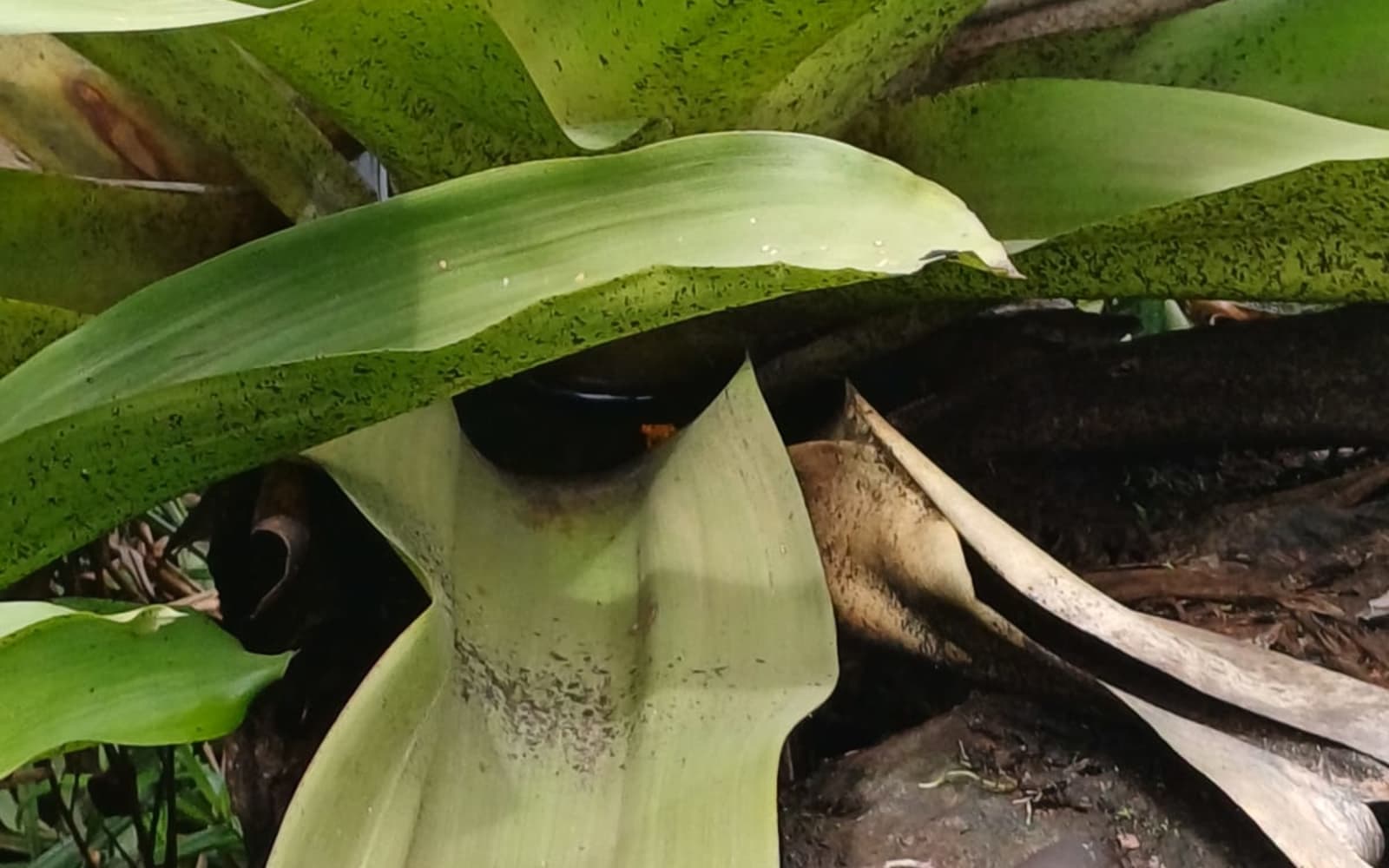
You come to Kaieteur for the thunder: a single drop of water so tall and so wide that the spray hangs over the gorge like weather. But some of the most memorable moments on the plateau happen at knee height, when a guide stops beside a big spiky plant, leans in, and points at a speck of gold.
That speck is the golden rocket frog, and for many visitors it becomes the surprise highlight of the day.
A frog that lives almost nowhere else
The golden rocket frog (scientific name *Anomaloglossus beebei*, also called Beebe's rocket frog) is found only in Guyana. For most of its known history it has been recorded on the Kaieteur plateau inside Kaieteur National Park, at around 450 metres above sea level. More recent records place it on Mount Ayanganna too, but Kaieteur remains the place people know it from.
Because its world is so small, under 20 square kilometres by the estimate used for its conservation assessment, the IUCN lists it as Endangered. Every frog you see on the trail is part of a very small population, which is why the park asks visitors to look, photograph and leave it be.
It is also tiny. Adult males measure only about 17 millimetres from snout to vent, so a full-grown frog would sit comfortably on a fingernail. Females are the showier ones, a bright golden yellow, while males tend to be duller and browner. That is the opposite of many animals, where the male wears the brighter colours.
Life inside a giant bromeliad
The real secret of this frog is where it lives. Scattered across the open, rocky ground near the falls are giant tank bromeliads called *Brocchinia micrantha*. Their stiff leaves overlap at the base and catch rainwater, creating dozens of little pools tucked into the plant.
For the golden rocket frog, each bromeliad is a whole neighbourhood:
- The nursery. Females lay a small clutch of eggs, often around four to six, near the waterline of a leaf pool.
- The babysitter. Males guard the eggs and carry newly hatched tadpoles on their backs to a different pool, spreading the family across the plant. Females can do this too when no male is around.
- The pantry. The tadpoles grow in these small, acidic pools, feeding on fallen plant matter, tiny organisms and algae. Females sometimes lay extra unfertilised eggs as food for them.
- The territory. Males defend their pools and spend hours each day calling to attract females. Researchers studying the frogs at Kaieteur found that calling takes up a large share of a male's energy, and that females pay attention to how long and how often a male calls.
Breeding happens all year but peaks in the wettest months, roughly June to August, when the bromeliads are brimming. Some scientists think the constant mist drifting off Kaieteur Falls helps keep this damp little world alive.
How to spot one on your visit
Seeing the frog is never guaranteed, but your chances are good if you know how to look:
1. Walk slowly near the big bromeliads on the trail between the airstrip and the viewpoints. Your guide will know the plants where frogs are often seen. 2. Look into the centre of the plant, not the outer leaves. The frogs sit close to the water pools and can disappear in a hop. 3. Listen. On a quiet moment you may hear males calling before you see anything. 4. Hands off. Don't touch the frogs or reach into the bromeliads, and keep to the path so the plants aren't trampled. 5. Use your phone's zoom, not your fingers. A steady close-up of a gold frog against green leaves is one of the best photos you can take home from Kaieteur.
A small reason to protect a big place
Kaieteur National Park protects the falls, the gorge and the forest around them, and it also protects this one small frog that depends on a single kind of plant on a single plateau. When you stand at the edge and watch the Potaro River pour over the rim, remember that a few steps behind you, in a cup of rainwater no bigger than a coffee mug, a father frog may be carrying his tadpoles to safety.
Want to look for the golden rocket frog yourself? Seat availability changes daily, so check open seats on the [home page](/) or [request a date](/request). Read more about the park on our [Kaieteur Falls guide](/kaieteur-falls), and see today's photo, short and fact on [/today](/today).
Shared something we should credit differently, or want your video removed? Message us and we'll fix it the same day.
More Kaieteur stories

Kaieteur Falls facts: 25 things most visitors don't know
The best Kaieteur Falls facts in one place. A 226 m single plunge, a frog that lives in one plant, a park older than almost any in the Amazon, and 22 more things most visitors never hear.
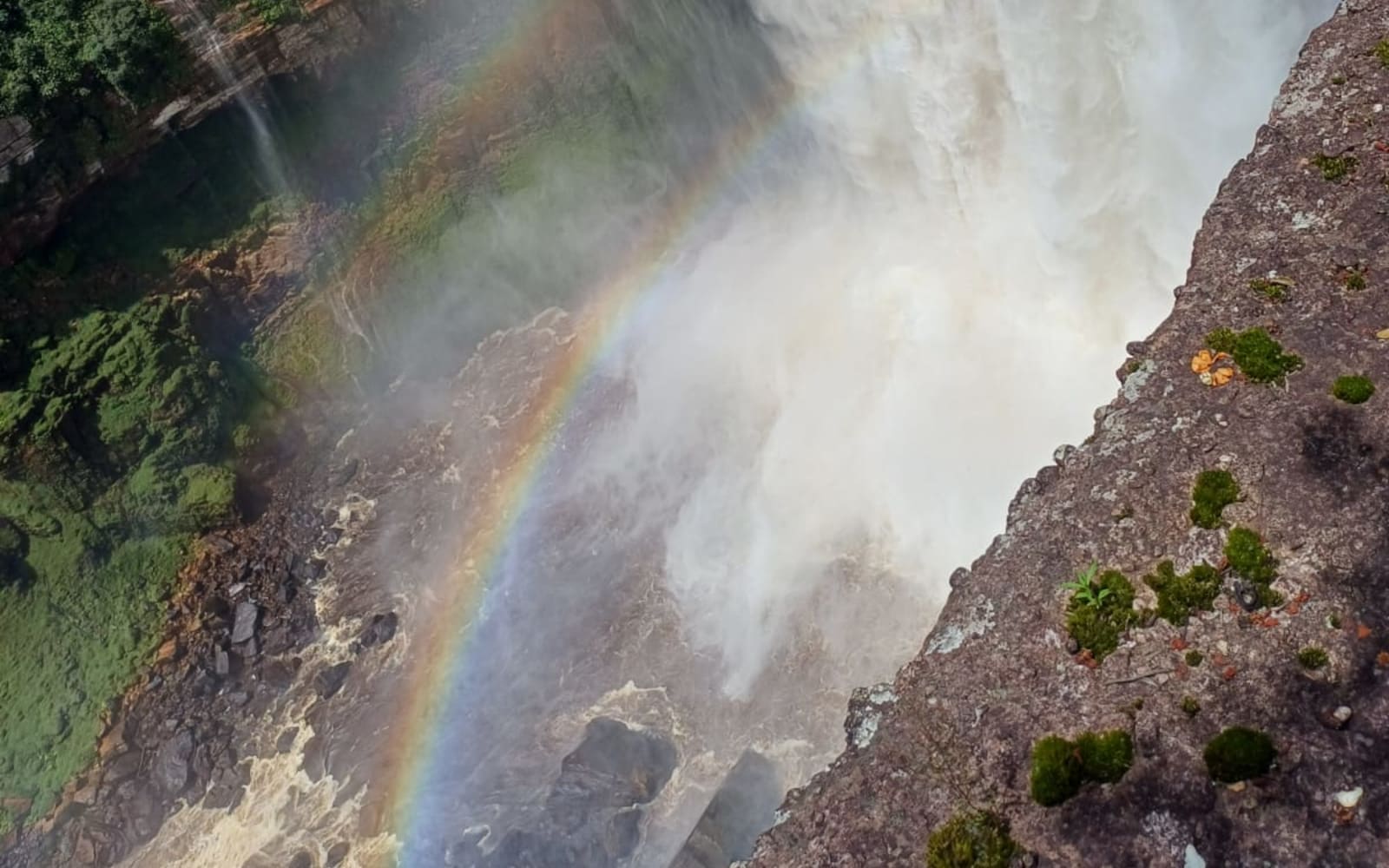
Best time to visit Kaieteur Falls: a month-by-month guide to rain, water and rainbows
The best time to visit Kaieteur Falls is the drier stretch from about February to April, or September to early November, when flights run more smoothly. Come just after the big rains for the most water. Here's how each month compares.

How tall is Kaieteur Falls? 226 m explained, vs Niagara and Angel Falls
How tall is Kaieteur Falls? Its main plunge is about 226 m (741 ft), and about 251 m (822 ft) with the cascades below. Here's what those numbers mean next to Niagara and Angel Falls.