The golden rocket frog: Kaieteur's tiniest celebrity
It's smaller than your thumbnail, lives its whole life inside one kind of giant plant, and is found almost nowhere else on Earth. How to spot the golden rocket frog on your Kaieteur trip.
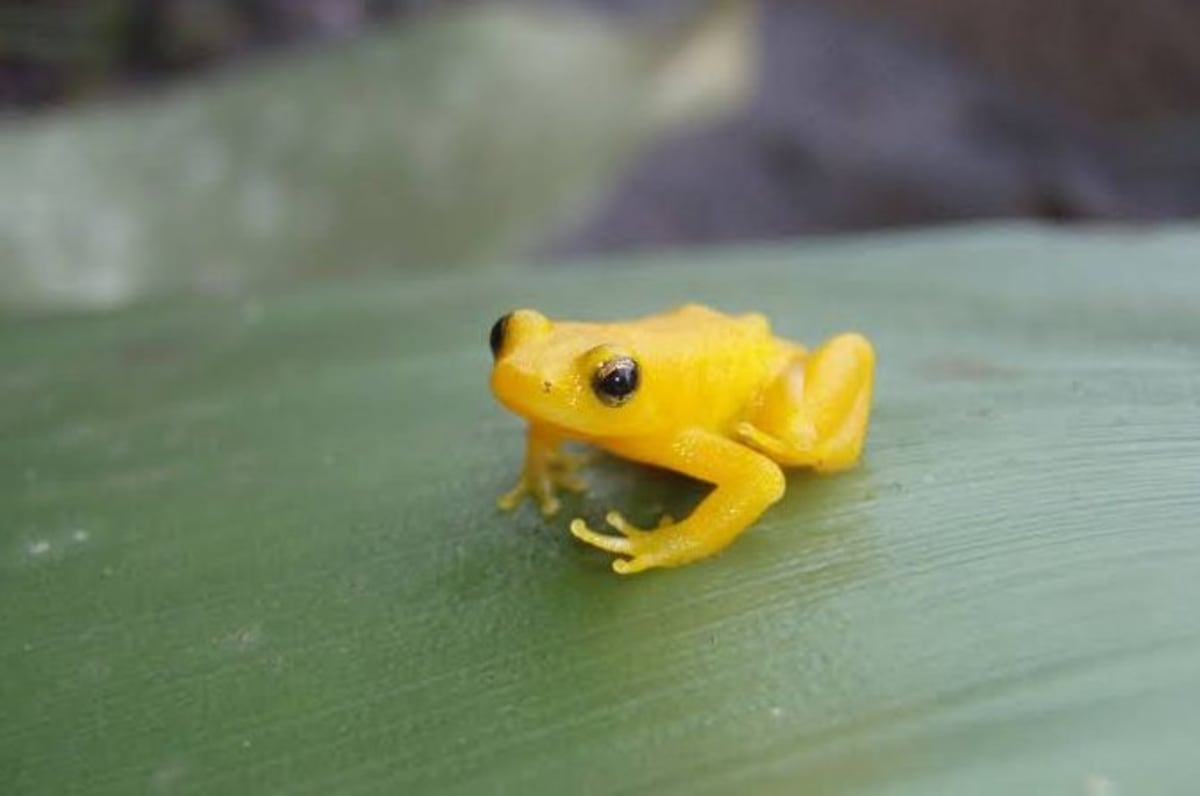
Most people fly to Kaieteur for the waterfall. The guides, though, are just as excited about a frog about two centimetres long.
What it is
The golden rocket frog (scientific name Anomaloglossus beebei) is found on the Kaieteur plateau and almost nowhere else. Its whole known range around the falls covers less than 20 square kilometres, and it has also been recorded on Mount Ayanganna. Because its range is so small, it's listed as a threatened species.
It's bright golden-yellow, which is why so many people assume it's a poison frog. Most accounts say it isn't, although scientists' reports differ, and either way you should never touch it. Interestingly, the females are the brighter ones. The males are duller and more brown, and they're the ones you'll hear calling.
It lives inside a plant
The frog spends its entire life in the giant tank bromeliad (Brocchinia micrantha), the huge pineapple-like plants you'll walk past on the trail to the viewpoints. Their tightly packed leaves catch rain and mist, and each one holds a little pool of water.
Those pools are the frog's whole world:
- It lays its eggs there, and the tadpoles grow up in the water between the leaves.
- The parents care for their young and will move tadpoles from one pool to another.
- It hunts the small insects that live in and around the plant.
Researchers think the constant mist from the falls is part of why the frog lives here and nowhere else: it keeps the bromeliads, and the frogs, permanently damp.
How to see one
Your guide will usually check the bromeliads along the trail. A few tips:
- Stay still and use your zoom. The frog is shy. If you lean in or brush the leaves, it drops back into the water and you won't see it again.
- Don't touch the plants or reach into the leaves.
- Listen. Males call from their territories for hours a day, so you may hear one before you spot it.
- Be patient, and don't be disappointed. Sightings are common but never guaranteed.
Other things to look out for
The plateau is full of life that only exists in this corner of the world. Keep an eye out for the bright orange Guianan cock-of-the-rock, the white-collared swifts that nest behind the falls and fly in at dusk, and the unusual plants along the trail, many of which grow only on these sandstone plateaus.
You'll find more about the wildlife and the trail in our [complete Kaieteur Falls guide](/kaieteur-falls).
Shared something we should credit differently, or want your video removed? Message us and we'll fix it the same day.
More Kaieteur stories

"Video doesn't do this place justice": a waterfall sceptic meets Kaieteur
Travel creator Eli usually finds famous waterfalls a let-down. Her Kaieteur trip, with a week of waiting, a bumpy landing and a storm, changed her mind.
Rain, a cancelled flight, and then the last viewpoint: Jana Alessa's Kaieteur day
German travel creator Jana Alessa nearly missed Kaieteur twice: first the morning flight was called off, then rain hid the first two viewpoints. The third one made it all worth it.

Thirty years in Guyana, first time at Kaieteur: Alex Power's day trip
Guyanese YouTuber Alex Power finally made the trip he'd put off for three decades: Kaieteur in the morning, a swim at Orinduik in the afternoon. Here's what his day looked like.